
Select your language


- Details
|
|
|
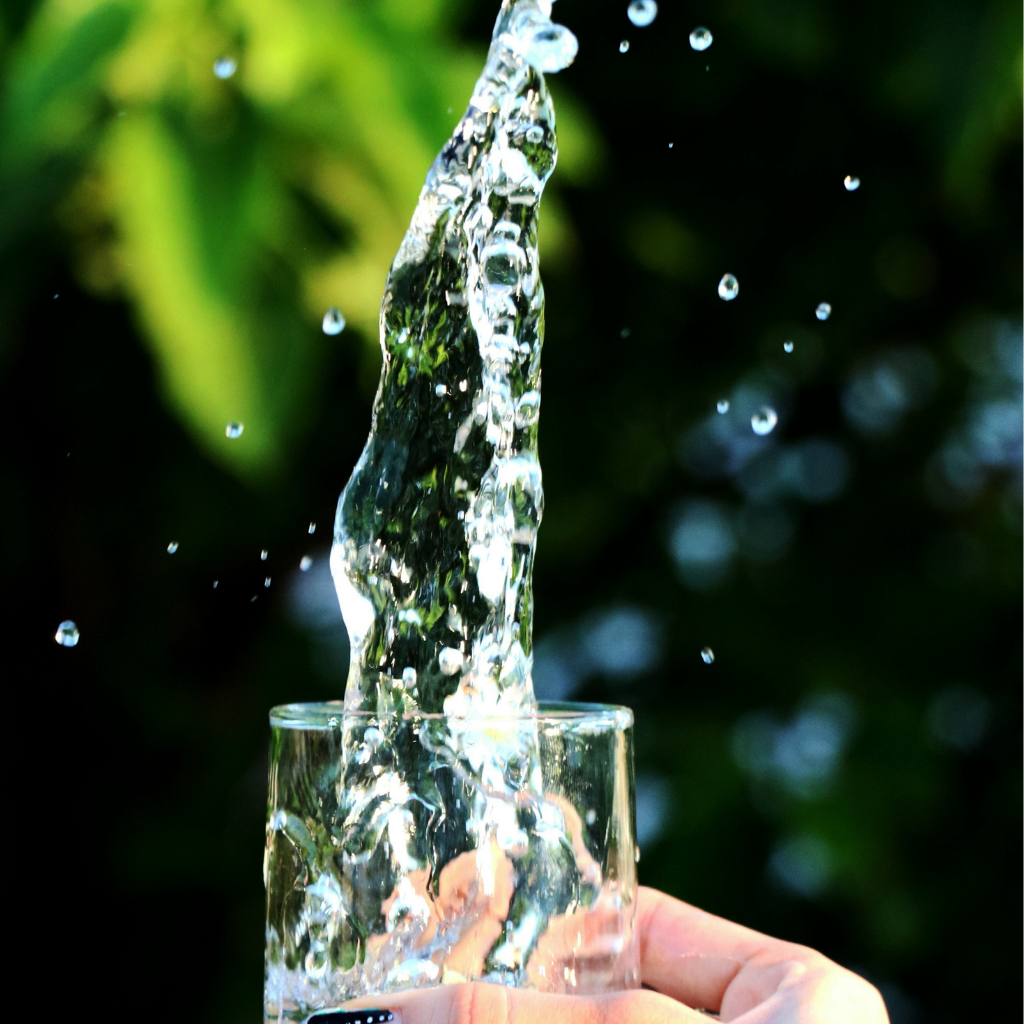
Throughout history and the different cultures, water has had various mystical meanings. It has been the focus of many philosophical essays (such as Thales and Heraclitus). It is an essential element in different religions (Tao, Christianity). Formerly, it was considered one of the four elements, but eighteenth-century chemists proved that water is a compound of hydrogen and oxygen. Although water has been and remains the main subject of many scientific researches, its true essence has not been discovered yet.
There are different disciplines that defend the importance of water:
|
For biologists, water is the mother of evolution, the matrix of life. They even go as far as to say that water is the fundamental substance for the biological production of energy from the earth (photosynthesis):
which comes from the radiation of the sun's energy. Without this process, life would be impossible. |

|
For physicists, the driving force of life is the gradual loss of energy of electrons caused by metabolic processes, during which electrons with a high energy charge originating from the photosynthetic reaction, at one time achieve their state of lower energy. One of the most common outcomes of this process is water. |
|
For chemists, water is the last oxidized material; water cannot undergo further oxidation; it may be considered as the final state in the reactions of life systems. If a chemist comes upon this substance for the first time, he or she would refer to it as dihydrogen oxide, a term that lacks the pleasant connotations of the word water, a dear and pure liquid that calms our thirst, refreshes and deans us, and keeps the forests green and the wheat fields golden. |
The continued interest in water has resulted in the emergence of an entire group of "water sciences", for example:
- Meteorology
- Hydrology (surface and groundwater)
- Limnology (freshwater biology)
- Oceanography
- Marine Biology
Water is odorless, tasteless, colorless in small quantities and greenish in large masses.
It is a poor conductor of heat and electricity.
Water refracts light.
It dissolves many substances
It consists of HYDROGEN (11'19 parts by weight and 2 by volume) and OXYGEN (88'81 parts by weight and 1 by volume).
When it is decomposed by an electric current (electrolysis of water) the mixture of H and O is triggered.
Water is obtained by distillation.
- Details
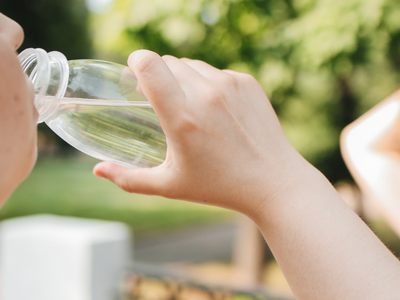 |
65% of our body weight and 90% of the human brain is made up of water, with a saline content of 0.9%. Bones contain 30% water. This is equivalent to 45 liters of water that is found inside the cells (intracellular water) or outside the cells (extracellular water). In this case, it can be part of the interstitial fluid that coats the cells or of the circulating fluids, especially blood plasma. Intracellular water makes up 50% of the lean body mass (about 25 liters) and extracellular water 20% (about 16 liters), a percentage that is divided between the interstitial fluid (15%) and circulating fluid (5%). Between the two compartments of water in the body there is a continuous exchange whose balance is influenced, among other factors, by the variations of pH and the difference in the osmotic pressure of the cellular membrane. |
The daily loss of water in the body depends on physiological and environmental factors, among others, and its average value is approximately 2.600 cm3, distributed among urine (1200 cm3), feces (200cm3), sweat (360cm3) and breathing (840 cm3).
The water lost is obtained from our diet: one part is ingested directly and the other comes from metabolized food: the metabolic processes supply energy by oxidation and produce carbon dioxide (CO2) and water. An adult person weighing 70 kg can obtain approximately 300cm3 of water per day in this manner.
Thus, taking into account these losses, the volume of water that must be ingested directly or obtained from the water contained in food is 2,300 cm3 (or, 2,600 less 300 cm3).
In children, the balance of liquid is more delicate and dehydration (water deficiency in the body) can occur frequently.
Thirst is the main mechanism by which the body regulates the level of water required by the body, and the KIDNEY is the organ in charge of preserving the water balance by reducing or increasing the amount of water eliminated through the urine.
Water in its natural state is not pure, but carries dissolved mineral elements that are essential for the proper functioning of the body, and especially of the cells (sodium, potassium, calcium and magnesium mineral salts are the most important); therefore, the alteration of the water balance is closely related to the alteration of the saline balance.
Water deficiency in the body or simple or primary dehydration rarely occurs; on the hand, secondary dehydration (the deficiency of water and salts in the body) is more common and appears as a result of severe diarrhea, vomiting, fever and morbid conditions where there is a remarkable loss of water through urine, etc.
On the other hand, water retention in the body or over-hydration results from the intake of a greater amount of water than the amount expelled: this occurs during growth, pregnancy and convalescence in certain people who have a tendency to retain water. However, because water lacks caloric value, the weight gain experienced by the individual is not made up of fat in the true sense of the word.
Other disorders of water metabolism refer to the pH (acidosis, alkalosis) and the ionic balance of elements such as calcium, magnesium, phosphorus, sodium, etc.
Physiology discovered the importance of water in vital processes as a solvent of the carbon compounds that make up the chemical substances which are the foundation of life.
The majority of biochemical reactions can only be produced in water solutions. This means that water is able to transport dissolved substances through the different parts of the body such as blood, for example, which is water-based.
Water is the most important molecule of all the molecules of life.
The functions of water in the body have an equivalent outside of it. The water we drink and with which we bathe is a solvent, although it also eliminates our waste.
I WANT TO KNOW MORE ABOUT THE

If you need to ask any questions about our SLACKSTONE II® system to prepare Dialytic Water, you can do so from this form.
ABOUT US

WHERE TO FIND US?

CIF ES B80359474
Luis I, 70 - 28031 MADRID (España)
Telf.: (+34) 913.803.285
Mov: (+34) 680 426 033
Página web financiada por el Programa KIT Digital. Plan de Recuperación, Transformación y Resiliencia de España "Next Generation EU".


Copyright © 2023 Slackstone. Todos los derechos reservados.